
I’m often asked about the best kind of storage to use for your craft supplies and I have a lot of materials and equipment in the studio. There’s no right answer to this question as storage is such a personal choice. I need to keep everything well organised so I can find it easily. I don’t want to waste my creative energy trying to find the fabric and thread for a project.
Good to Know…
If you take good care of your storage it will last for years. I regularly dust and wash my Really Useful Boxes to keep them looking great. You don’t have to spend lots of money on storage, you can repurpose old tins and boxes and give them a makeover with spray paint to add personality to your workspace.
Fabric Storage

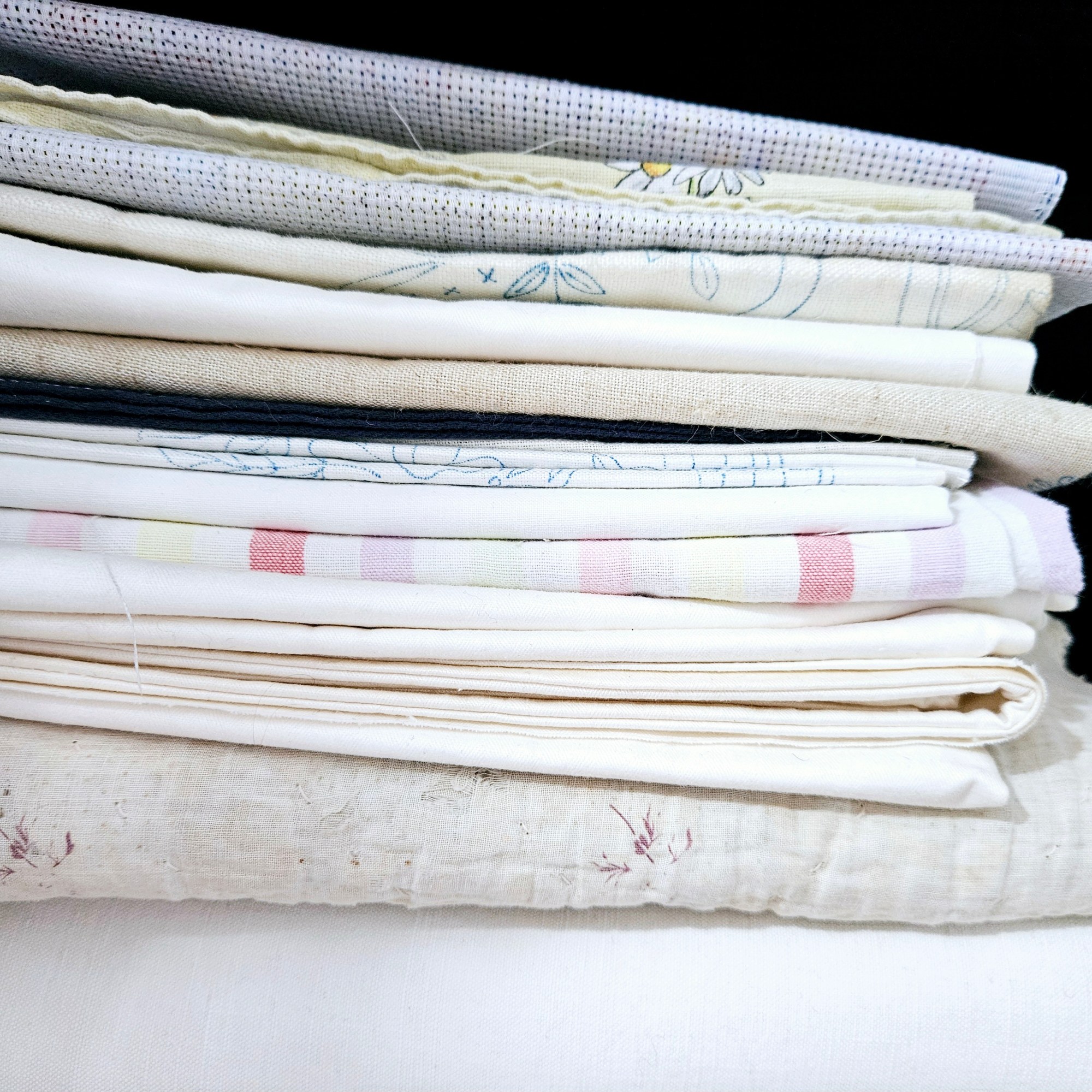

I’ve always organised my fabric by type, I find this works well for me as I know that I can grab the right materials for the job. I use this vintage bookcase so my fabric looks good and isn’t just crammed into a stack of storage boxes. You could also use something like an Ikea bookcase or storage cubes.
I have separate stacks for each type and then for things like smaller vintage pieces or scraps for stitchscapes I use random storage baskets and bins to keep them contained within the cupboard. This means I can take them out easily if I’m working on a new stitchscape or looking for inspiration from my vintage pieces.
I keep my interfacing on cardboard tubes which looks great but I have to admit, they do roll out every now and then. To stop this being such a problem, I bought some clear acrylic book ends to wedge them in place.
Thread Storage
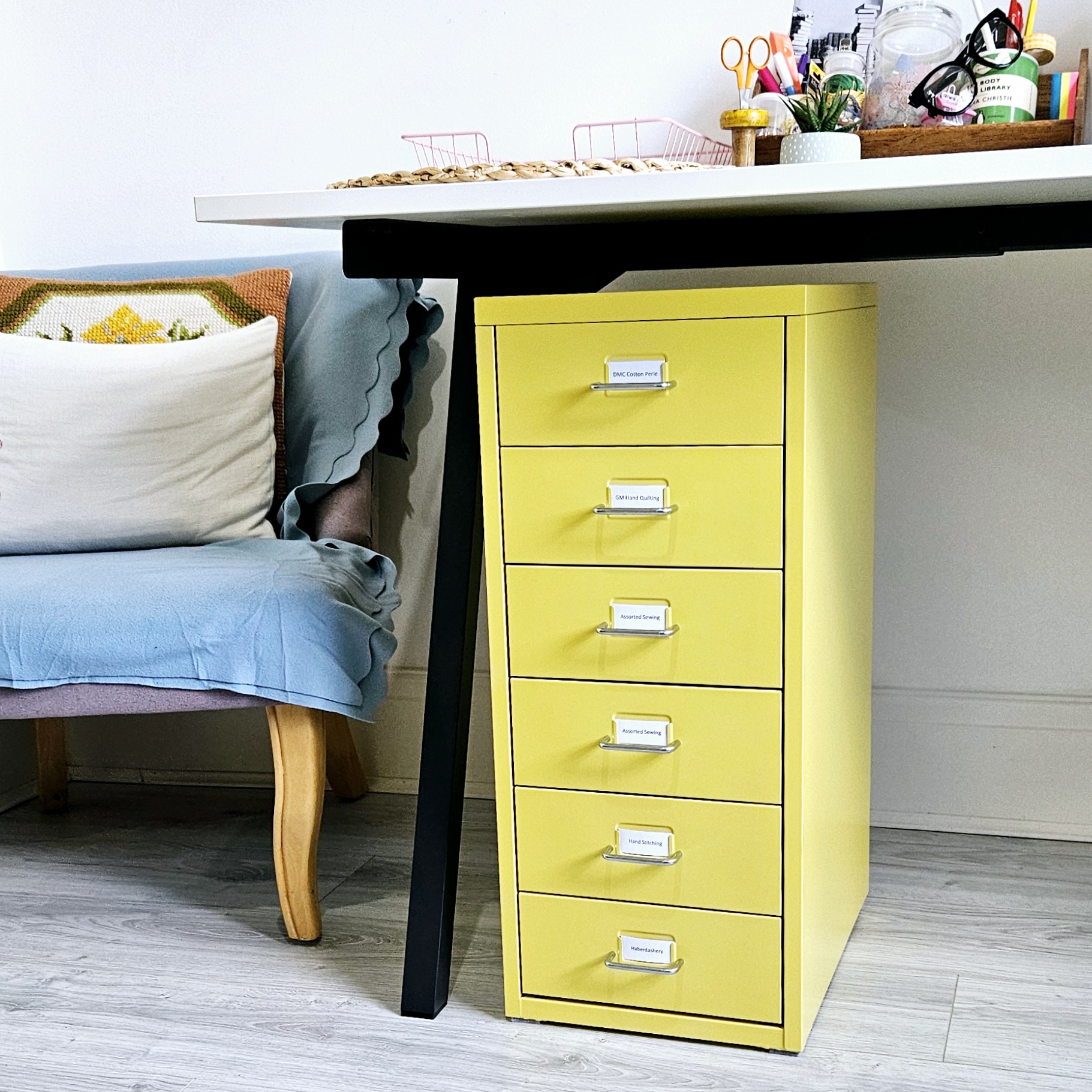
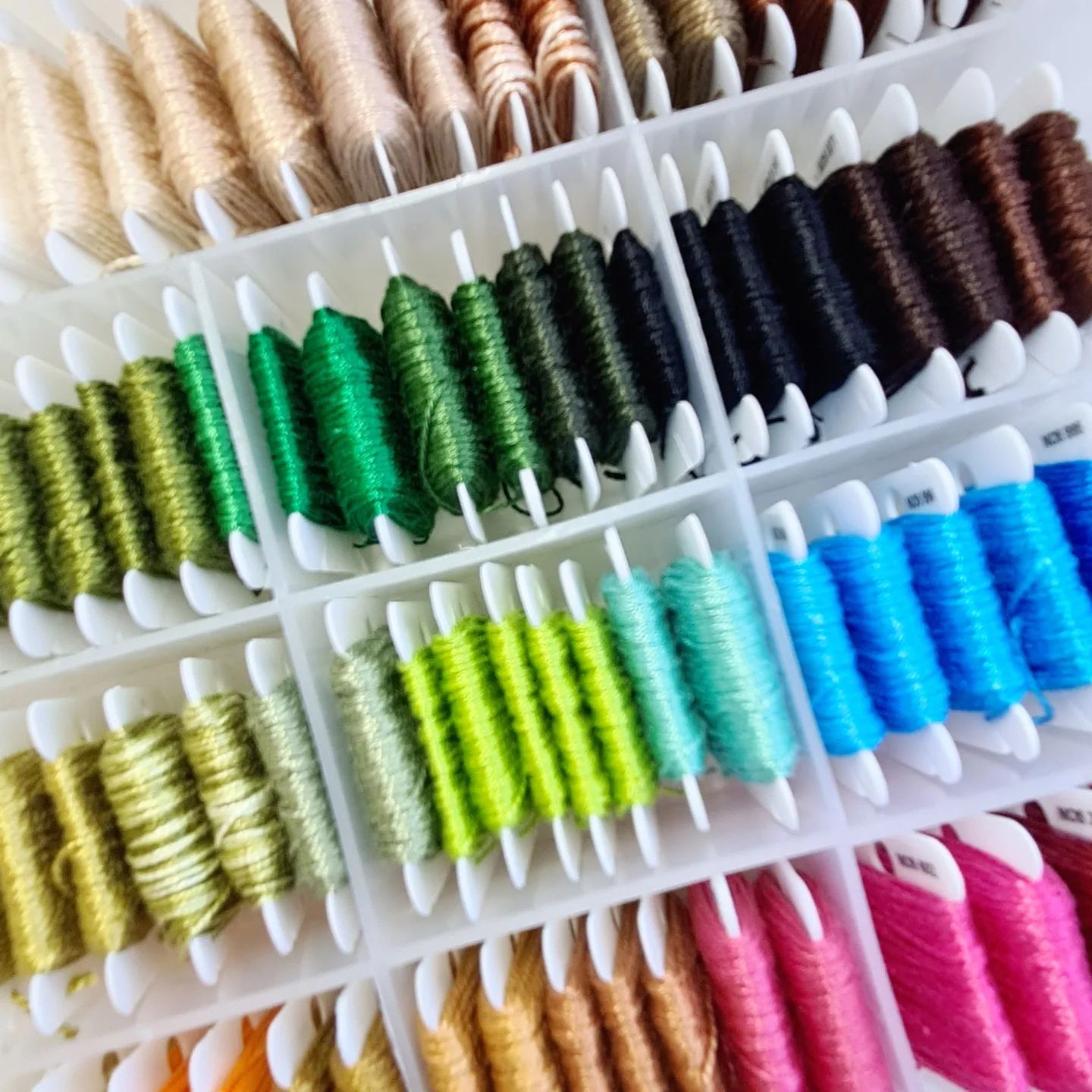
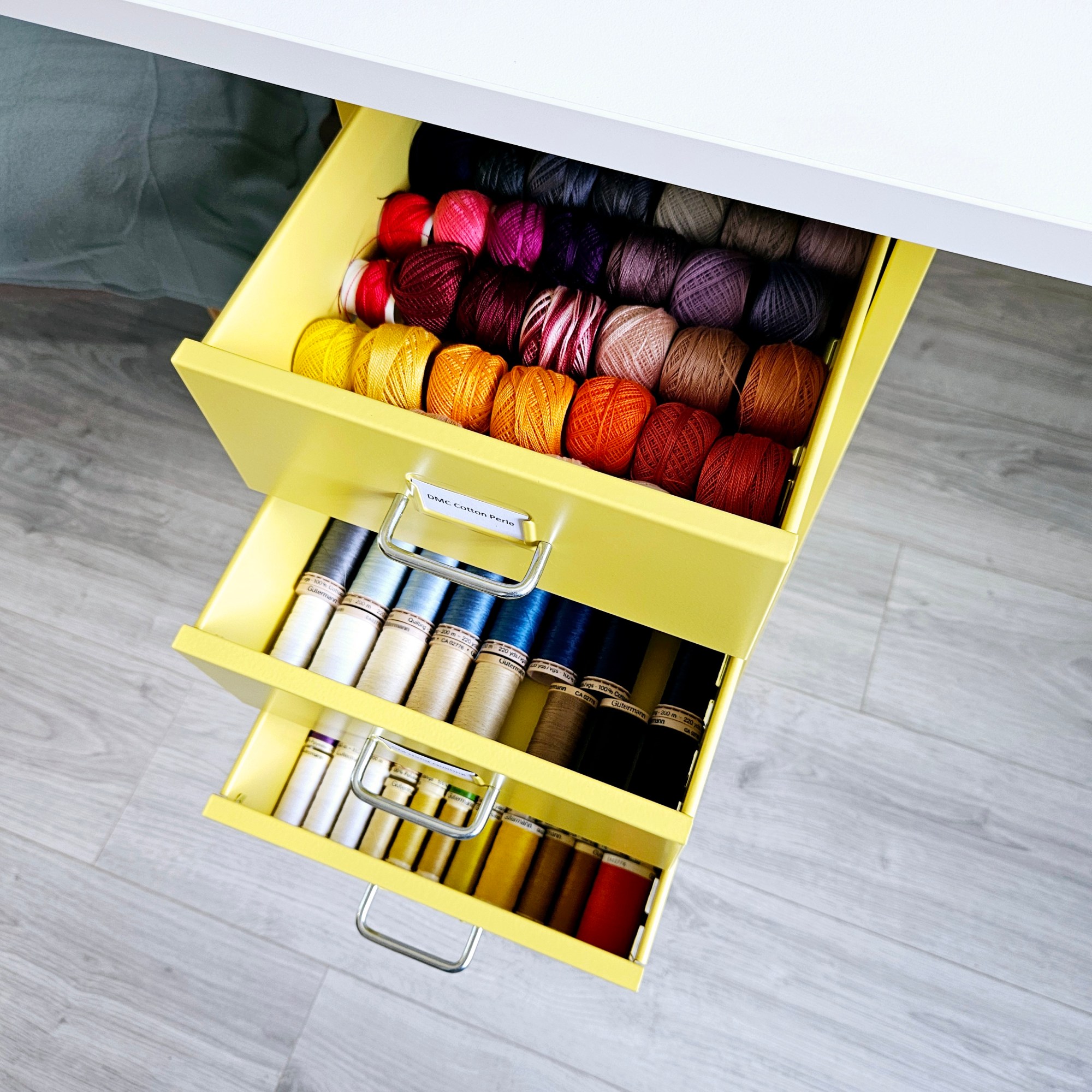
For the most commonly used hand stitching threads I decided to get some under desk drawers from Ikea for my DMC cotton perle and Gutermann hand quilting thread. This means I’m using the dead space under my pretty deep desk and I can grab a drawer and select the right thread. I organise them by type and colour as I find this really helpful and satisfying.
For my six stranded embroidery threads, I use the traditional thread storage boxes and reusable plastic bobbins. I can spend hours winding thread and sorting them by colour. It’s my relaxation activity. I also label my drawers and boxes to make finding things really easy.
Recently, I started buying DMC embroidery threads so I label each card with the type and colour so I can easily replace it for stock control and getting a colour match for projects and commissions.
Labelling
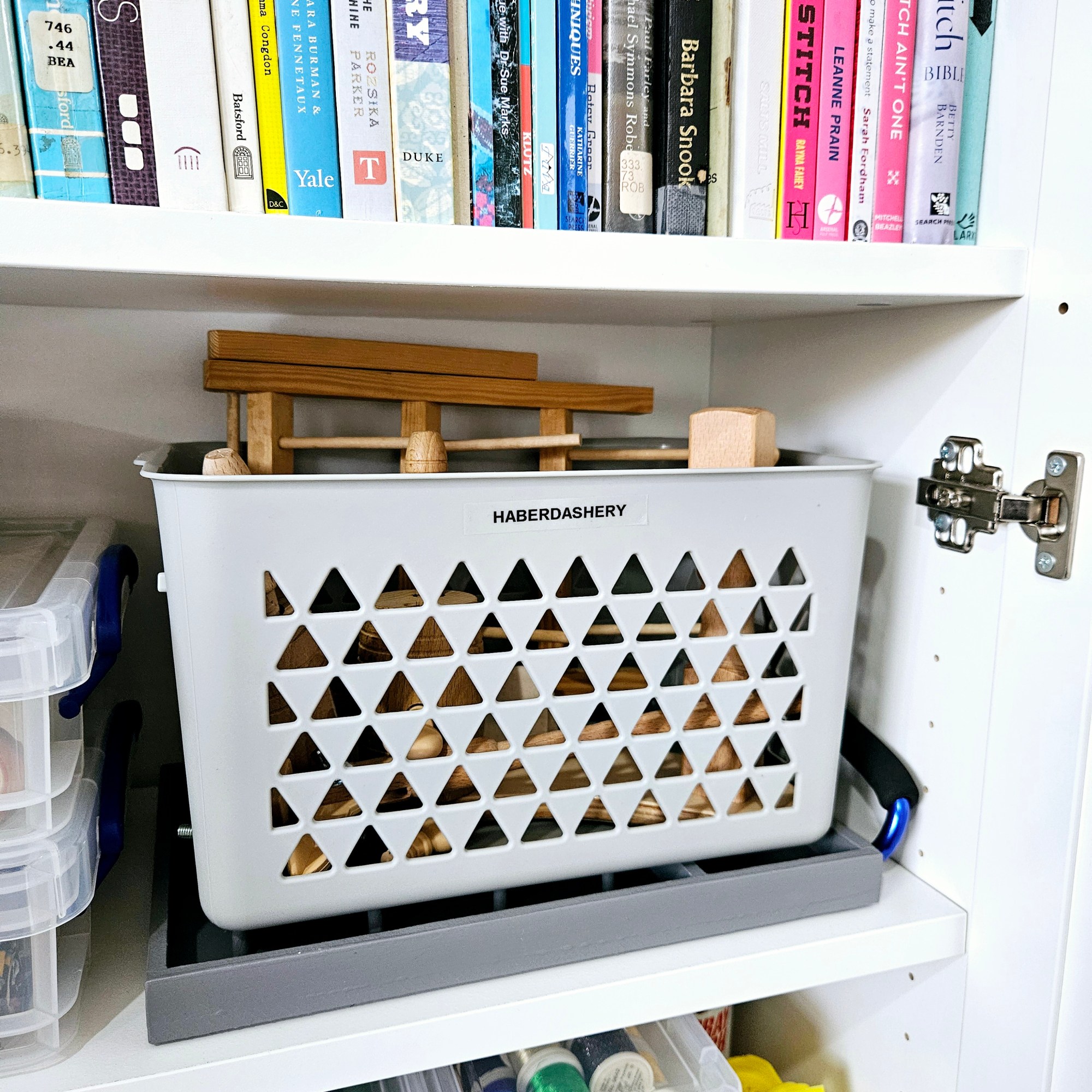
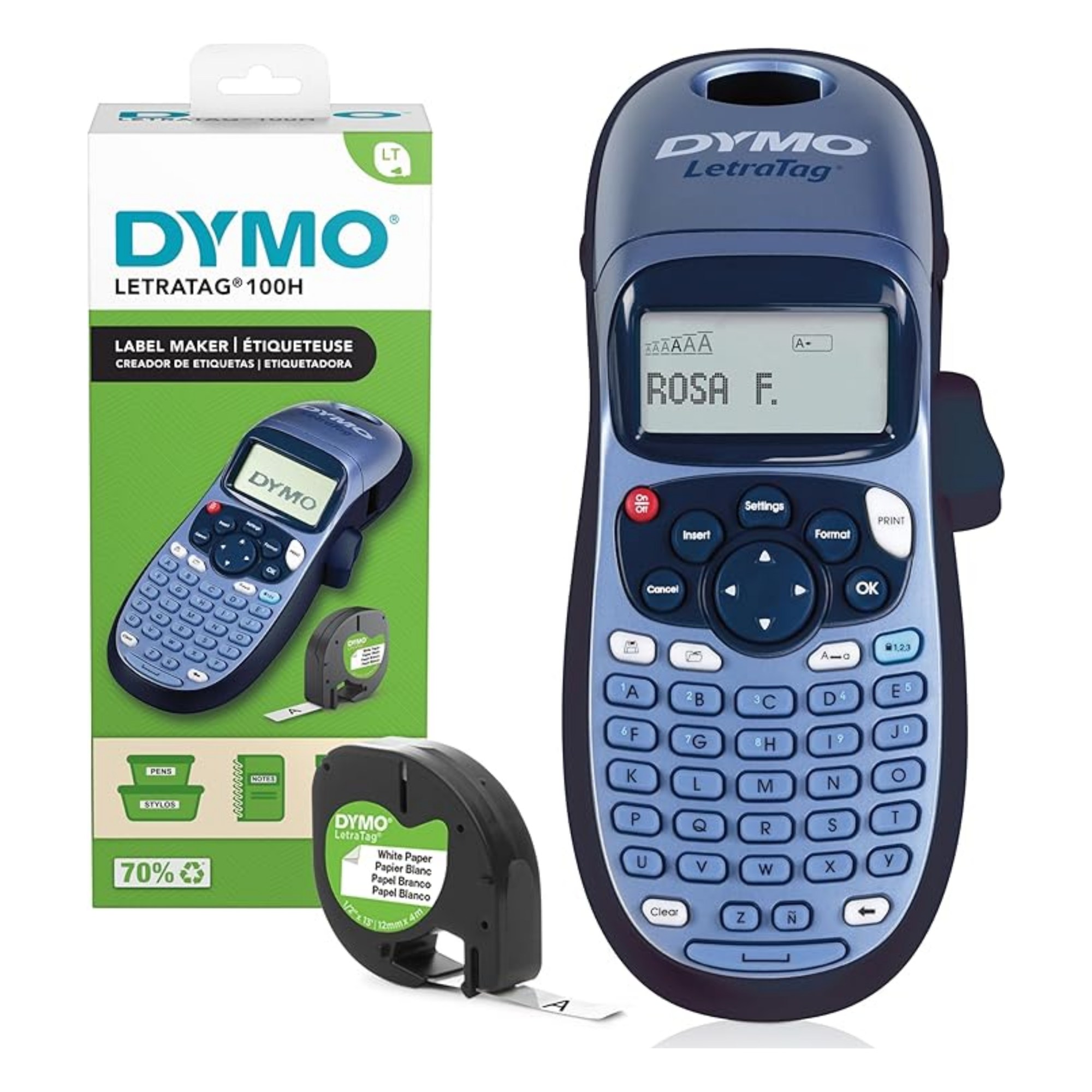

I love a label maker; I have a traditional Dymo machine that makes the embossed labels but I also have a Dymo Letratag electronic label maker. I use clear plastic labels and black text; it looks really sleek and professional on my shelves. I love labelling everything in my house from the kitchen to the garage. I will label something even if you can see the contents, this helps if I have a workshop in the studio or if my husband is helping me with something.
Because I love a template and using my laptop, I have a template drafted in Powerpoint with text boxes for labels that fit in my thread drawers and plan chest drawers. This means that I can type them out easily and then cut them out and place in the mounting plates. The dream is to have my handwriting turned into a font so it can be all handwritten one day.
Tip…
If you have sticky labels that are hard to peel off your boxes, use a piece of tissue or an old cloth and some Zippo lighter fluid or hairspray. It gets sticky mess cleaned up easily from plastic and metal but remember to wash your hands and wipe away any excess with a cloth.
***Please note that this is just my personal observation on the products I use regularly, everyone has their favourites and I recommend trying lots of different types to find the best one for you. ***
 hayleymillsstyles.com